
The best saunas have a quality that's easy to recognize but hard to name — the heat sits right, the proportions feel considered, nothing asks for your attention.
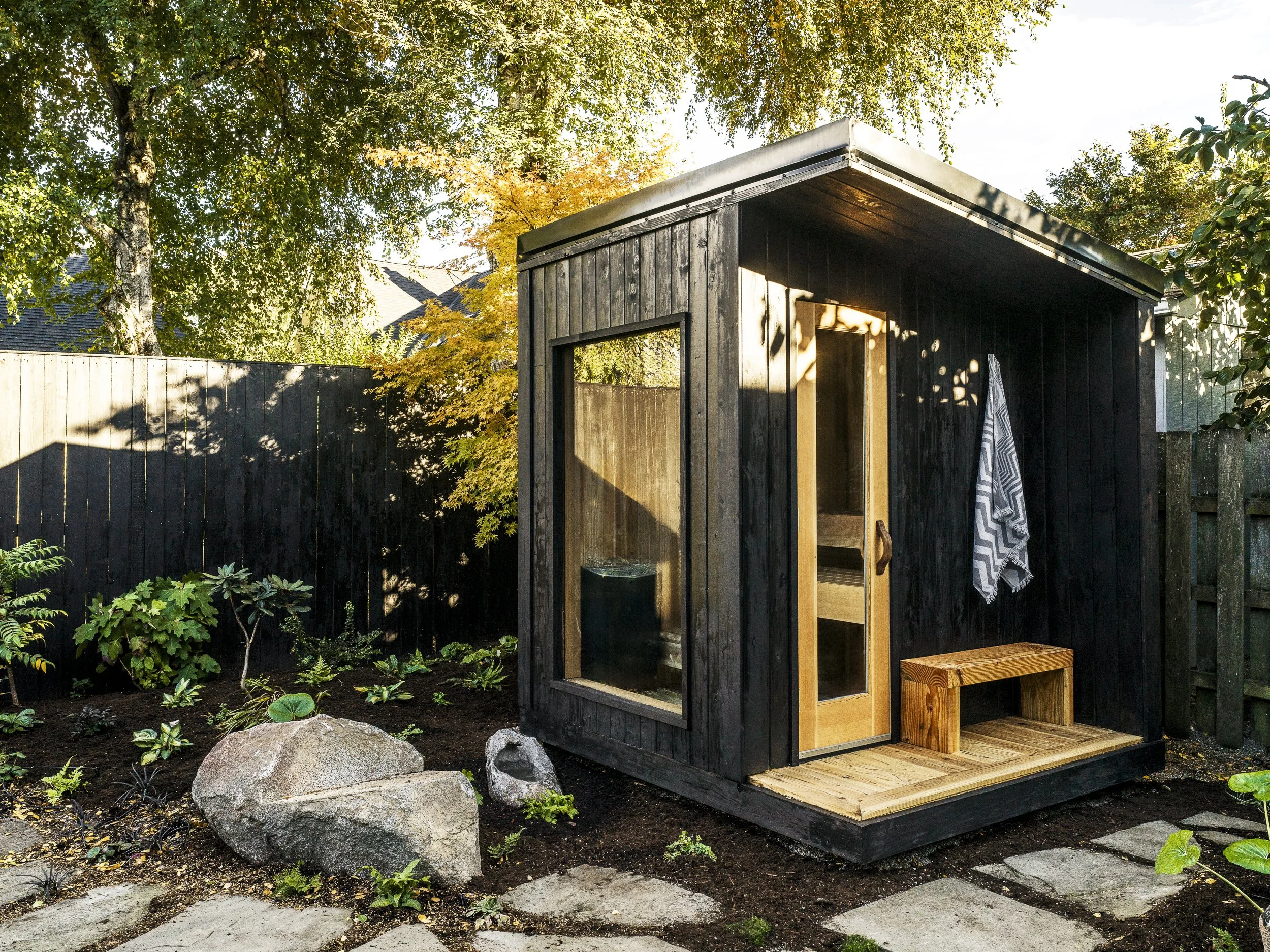
Kindred saunas are built in Portland, informed by a Japanese sense of space and the materials of the Pacific Northwest.
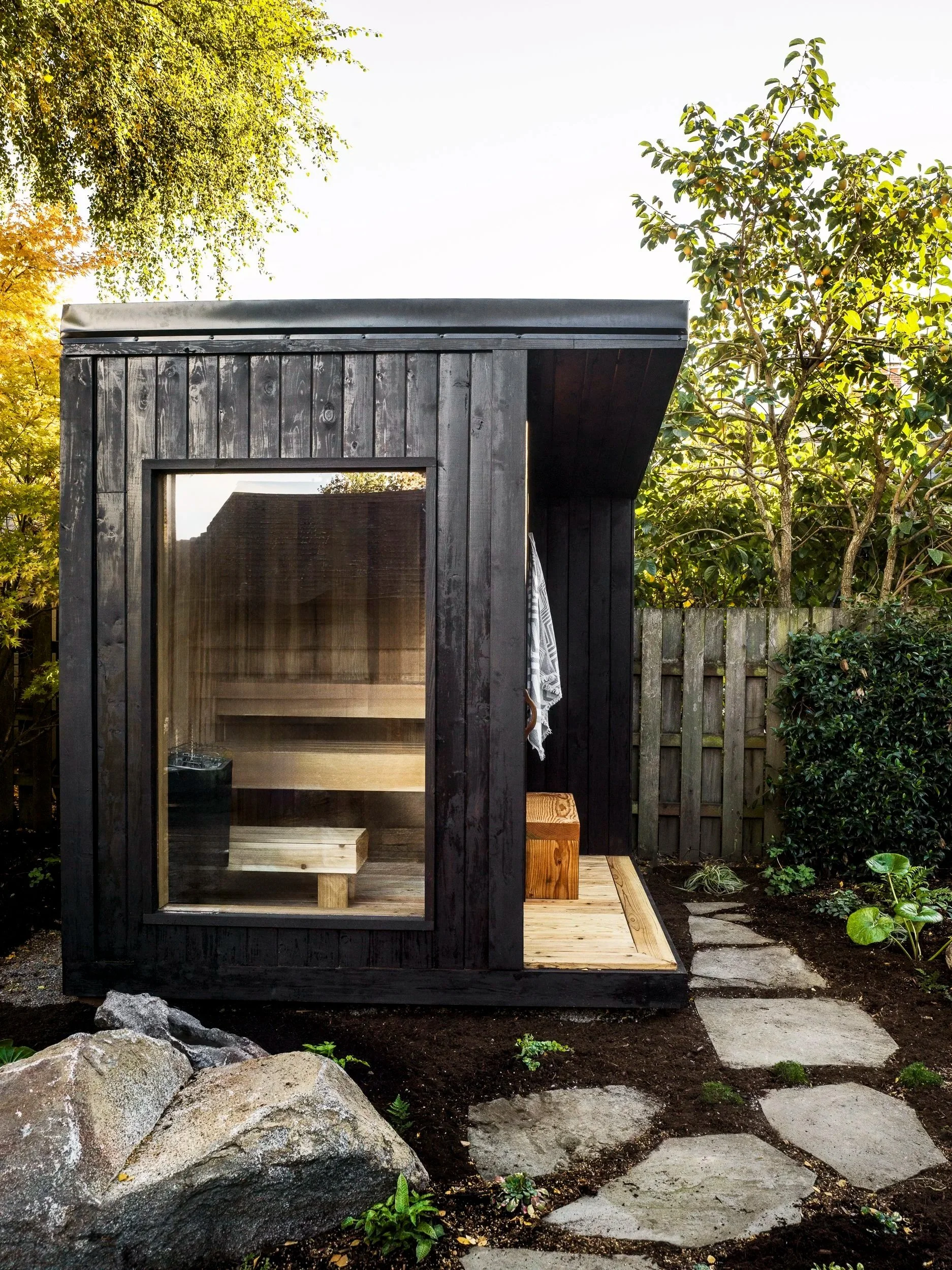
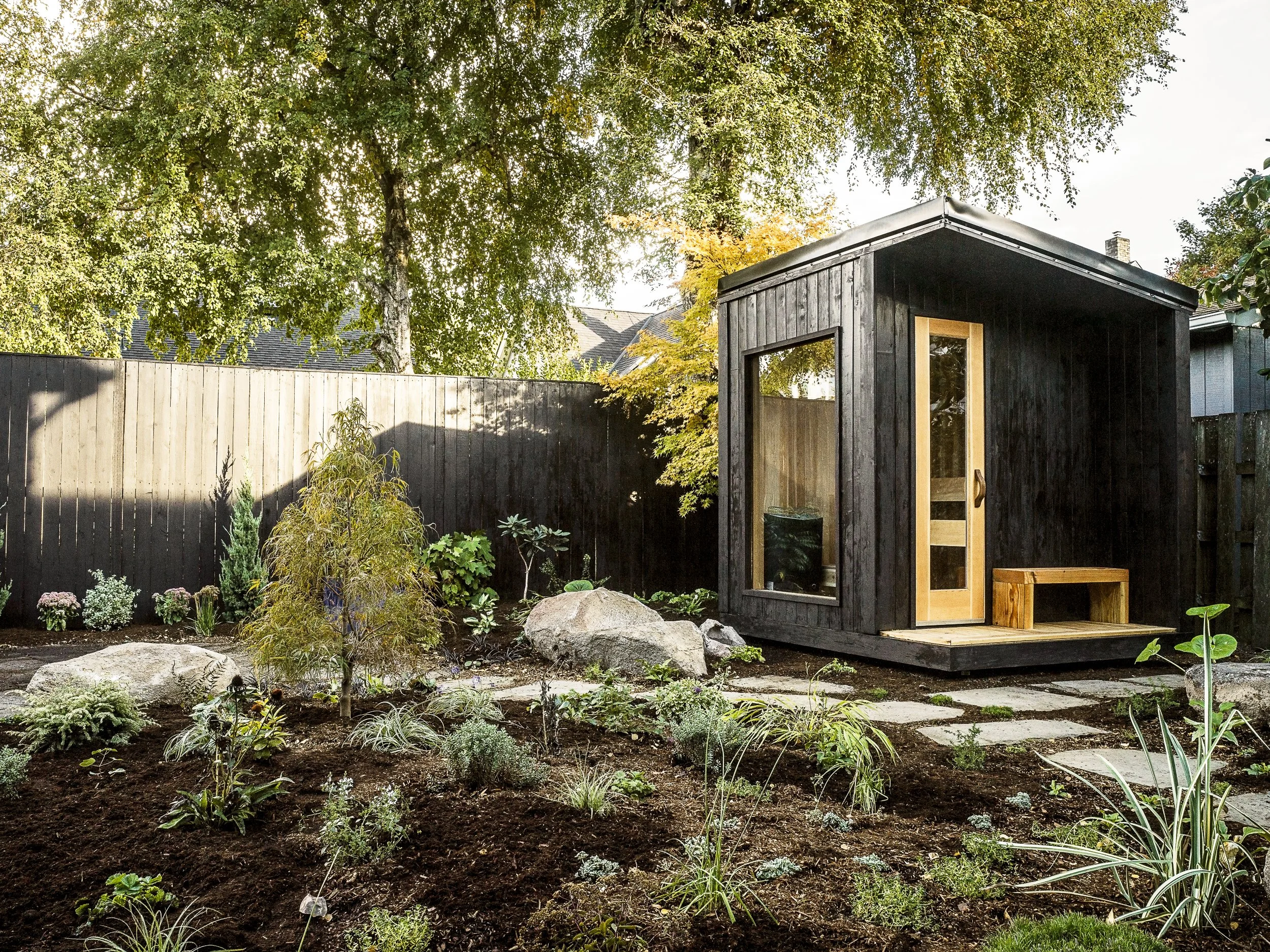

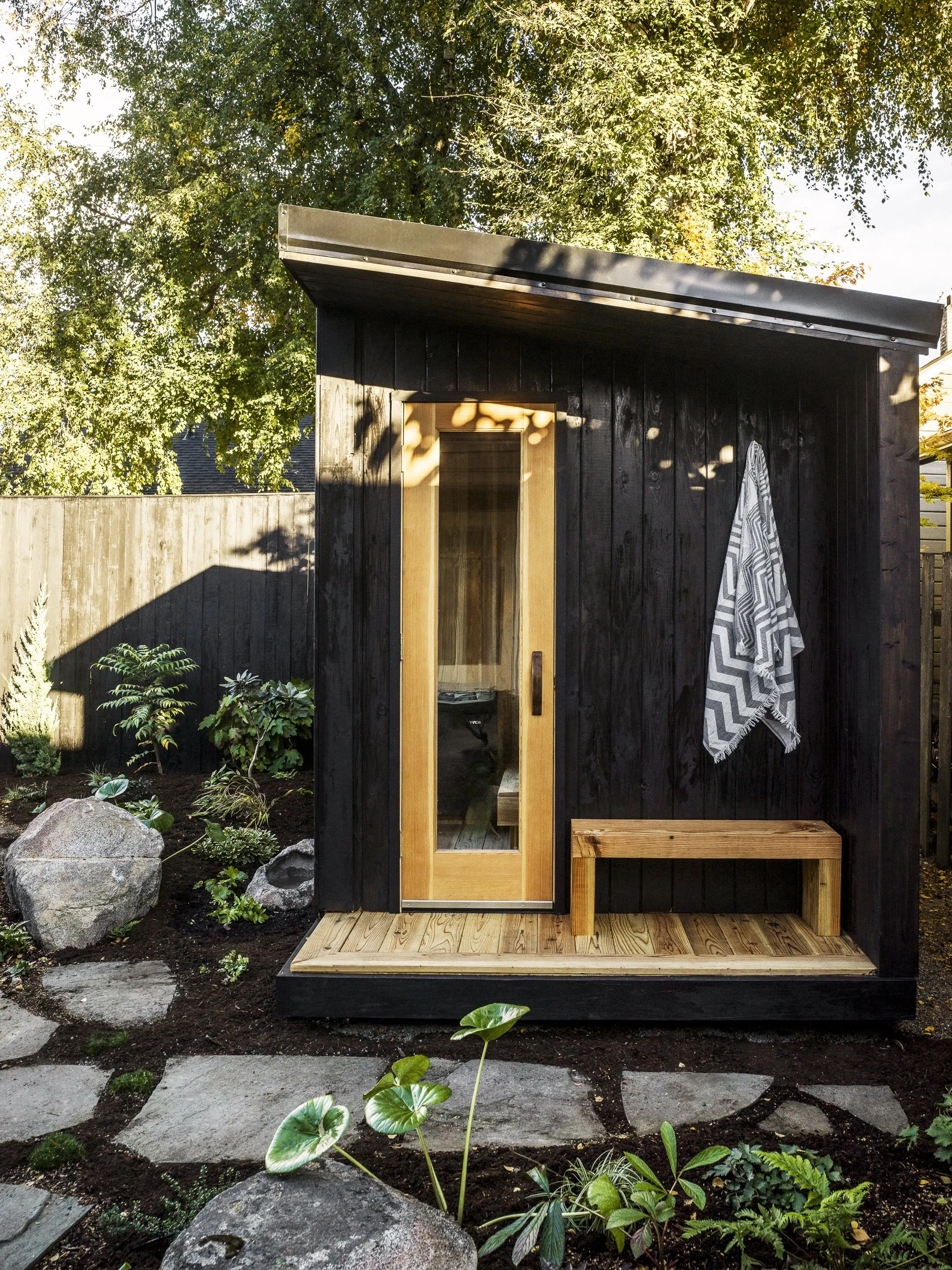
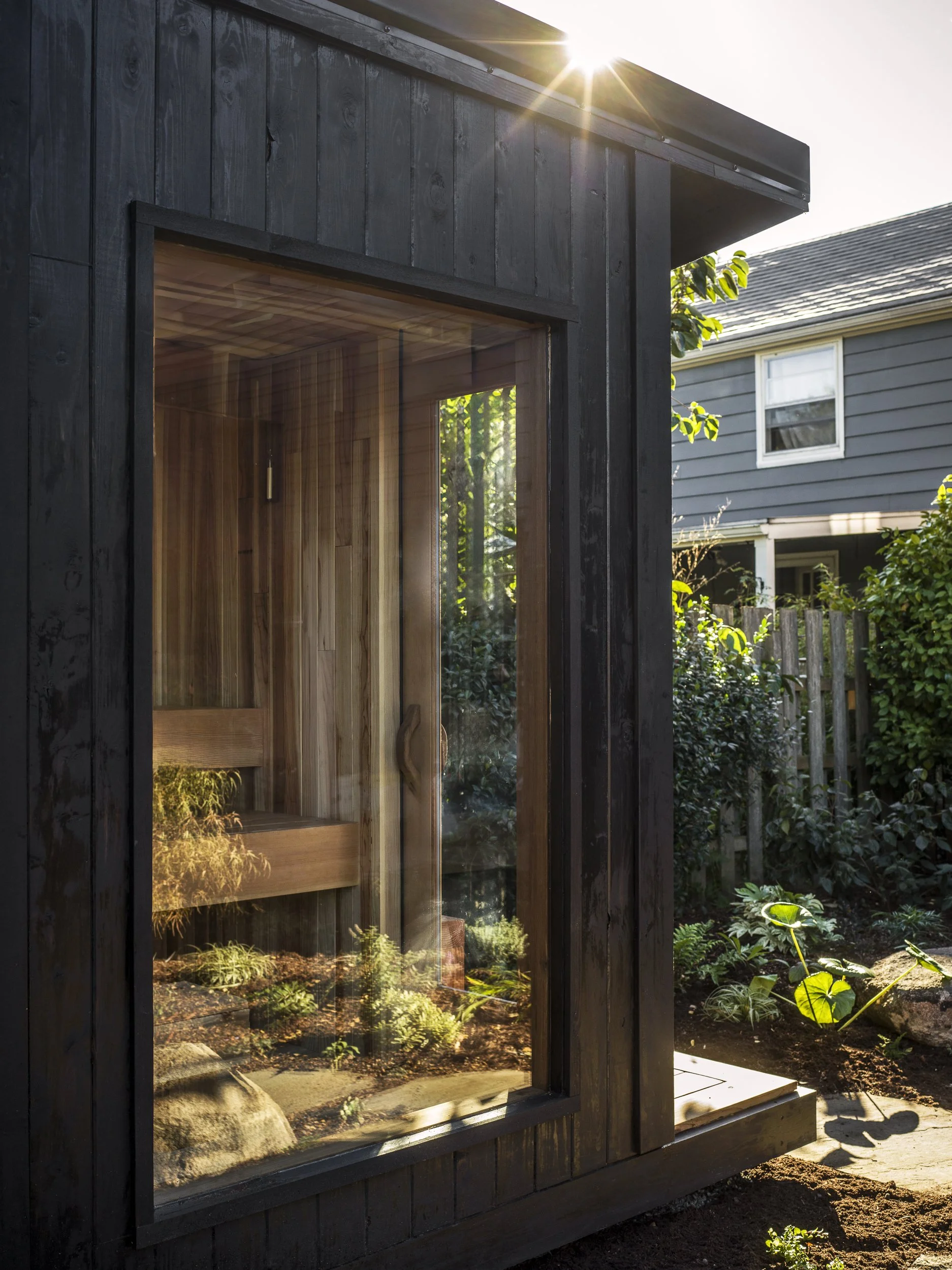
“A high degree of look good”
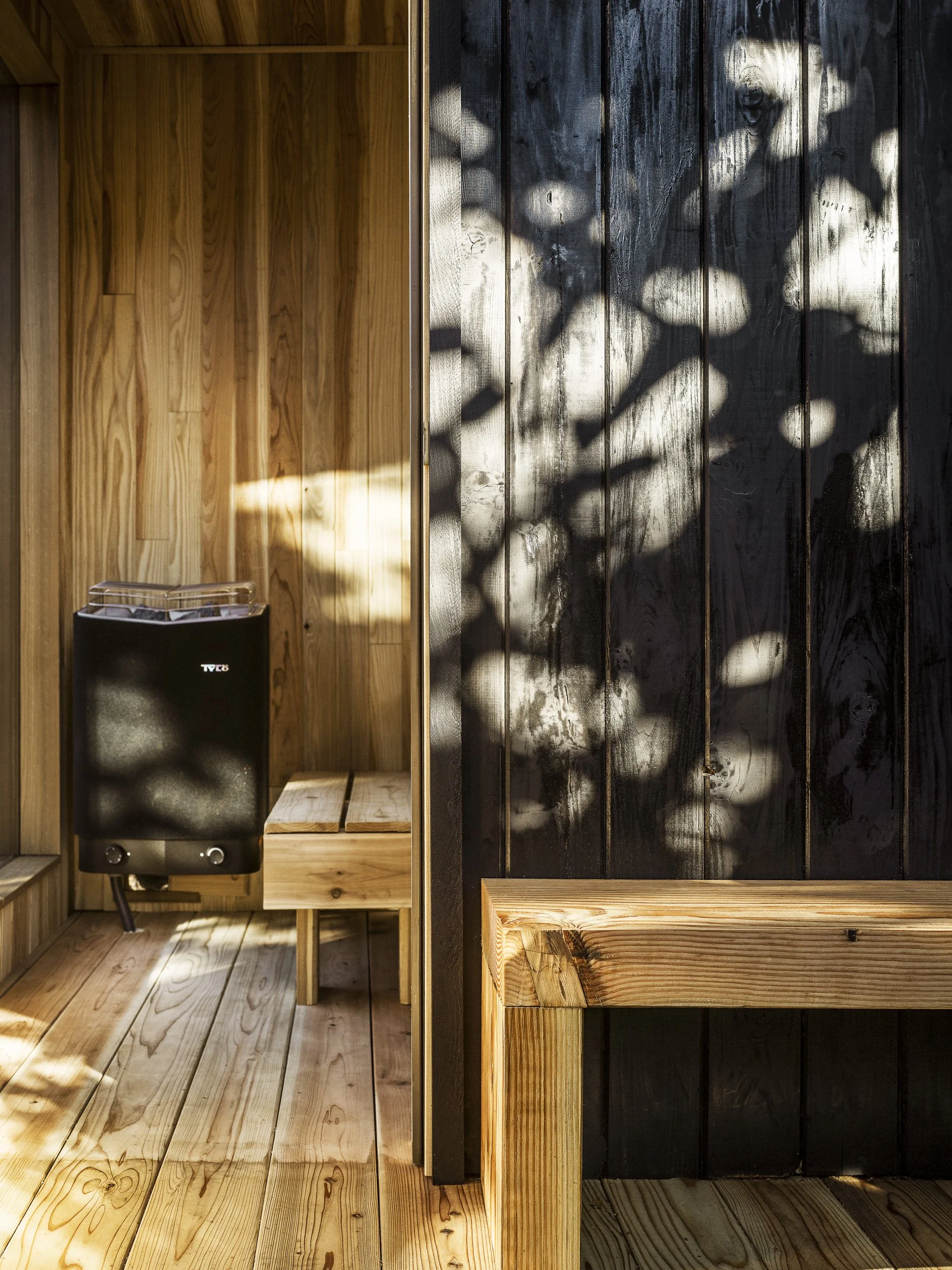
When you're sitting in 180-degree heat, what surrounds you matters. Cedar walls sourced through sustainable forestry, with salvaged material from Portland's own Rebuilding Center where possible. The exterior is finished with Viking Linseed Oil in black — a synthetic-free Scandinavian treatment that feeds the wood rather than coating it. ROCKWOOL insulation handles thermal performance without the off-gassing that cheaper materials introduce into an enclosed, heated space.
Most saunas built in the United States aren't built correctly — and you can feel it. Bench height is fundamental to löyly, the Finnish term for the quality of heat and steam that defines a proper sauna. Benches set too low miss the thermal layer where the heat is richest. Kindred benches are positioned where the heat lives, surfaced in alder — slower to conduct heat than cedar or knotted hardwoods, comfortable against skin through a long session in a way most bench materials aren't.
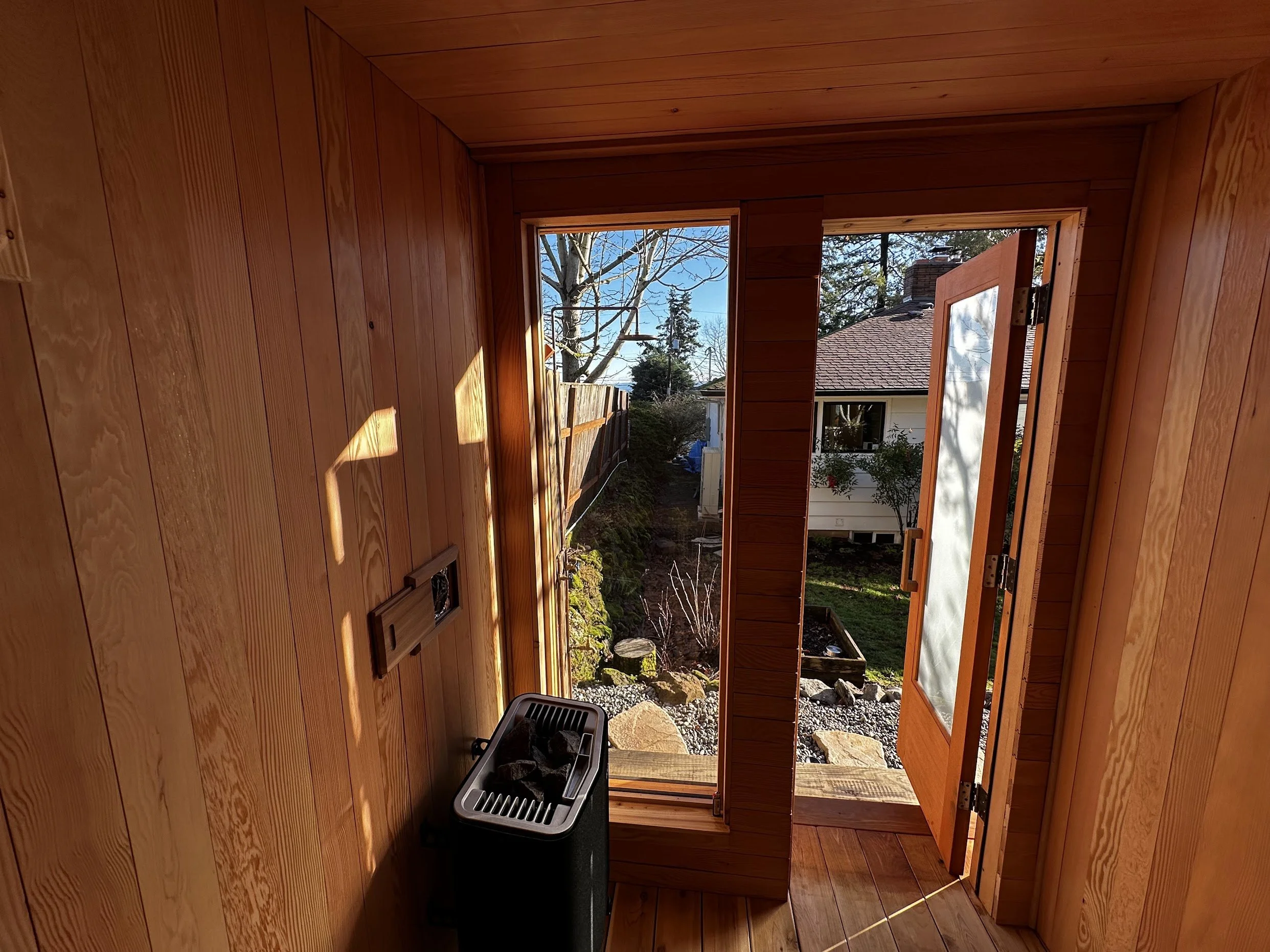
Ventilation is the other thing most builders get wrong. A poorly vented sauna feels heavy — the kind of session you cut short. Kindred saunas breathe the traditional way: fresh air drawn in low, stale air exhausted high, a passive circulation that keeps oxygen present without bleeding heat.
Heat is provided by a Tylö Sense electric heater from Sweden — one of the most respected elements in the world for the consistency of heat it produces. Paired with ROCKWOOL insulation and a proper vapor barrier, the room reaches temperature quickly and holds it. Steady, even, exactly where you want it.
What's pictured is a starting point. Every Kindred sauna is designed from scratch — dimensions, materials, configuration, and finish shaped through a collaborative process. We build something that feels inevitable for the space, not placed in it.
Specifications
-
2–3+ people, depending on configuration. Bench layout is designed around the thermal layer — where the heat is actually richest — not just the floor plan.
-
Exterior: 7’0” L x 8’0” W x 9’ 1” H
Interior: 6’2” L x 5’0” W x 7’1” H
-
45" × 72" dual-paned tempered glass — 1/8" thick panes with a 1/2" air gap between. Sized to frame the landscape without bleeding heat.
-
Exterior: cedar cladding, knotted cedar flooring, Douglas fir bench.
Interior: knotted select cedar flooring, knotted select and clear cedar tongue and groove walls, alder benches finished with paraffin oil. Alder is chosen for its low thermal conductivity — it stays comfortable against skin through a long session in a way faster-conducting woods don't.
-
Black Viking Linseed Oil. A traditional synthetic-free Scandinavian finish that penetrates and feeds the wood rather than sitting on top of it — it weathers well, doesn't crack or peel, and deepens over time.
-
Towel hooks sourced from Moroccan brass makers. Each one is slightly different — it's the whole reason to use them.
-
Standing seam metal. Fasteners are hidden under the seams — no hardware breaking the surface, no exposed leak points, and the metal expands and contracts freely with temperature. The right roof for the Pacific Northwest climate.
-
Tylö Sense 7kW electric heater, sourced from Sweden — one of the most respected elements available for the consistency and quality of heat it produces. Optional WiFi controller for remote scheduling.
-
ROCKWOOL R15 and R23 with aluminum vapor barrier. Chosen for thermal performance and because it doesn't off-gas — an important distinction in an enclosed, heated space where air quality matters.
-
25 square inches of passive ventilation: fresh air drawn in low, stale air exhausted high. Keeps oxygen present through a long session without bleeding heat. Mechanical ventilation available as an upgrade.

Black Viking Linseed Oil
Linseed oil has protected wooden structures in Scandinavia and Northern Europe for centuries — not because it was the obvious choice, but because it worked in ways nothing else did. It soaks into the wood rather than sitting on top of it, feeding the fiber from within and allowing the structure to breathe through wet winters and dry summers without cracking, cupping, or rotting. No brittle outer layer to peel. Nothing synthetic breaking down over time.
We finish every Kindred sauna exterior with Black Viking Linseed Oil from Earth and Flax — the same material logic that kept Nordic fishing huts and boathouses standing for generations. The black colorway draws a direct line to shou sugi ban, the Japanese tradition of charring wood to harden its surface and deepen its relationship to the landscape. Two cultures, separated by centuries and geography, arriving at the same instinct: the most durable finishes work with the material, not against it.
A Kindred sauna finished in linseed black will weather and settle into its surroundings over time — developing a patina that makes it look more at home, not less.
What the research shows
A landmark 20-year study of over 2,300 people published in JAMA Internal Medicine found that frequent sauna use was associated with dramatically reduced cardiovascular mortality — those bathing four to seven times per week showed roughly half the rate of those bathing once a week. A subsequent Mayo Clinic review linked regular use to lower blood pressure, reduced arterial stiffness, improved cholesterol, and a 65% reduced risk of Alzheimer's disease. A 2021 review in Experimental Gerontology described sauna as a probable means to extend healthspan.
Peter Attia, a Stanford-trained physician and longevity researcher, put it plainly after reviewing the Finnish data: "When you look at the largest published series on this, you see a relative risk reduction of 40 percent and an absolute risk reduction of 18 percent. Those are ridiculous numbers."
Beyond the heart, regular use measurably reduces cortisol by nearly 30%, triggers a 16-fold increase in growth hormone, and produces a sustained rise in beta-endorphins — the same compounds released during hard exercise. Most regular users carry that ease well into the rest of their day.